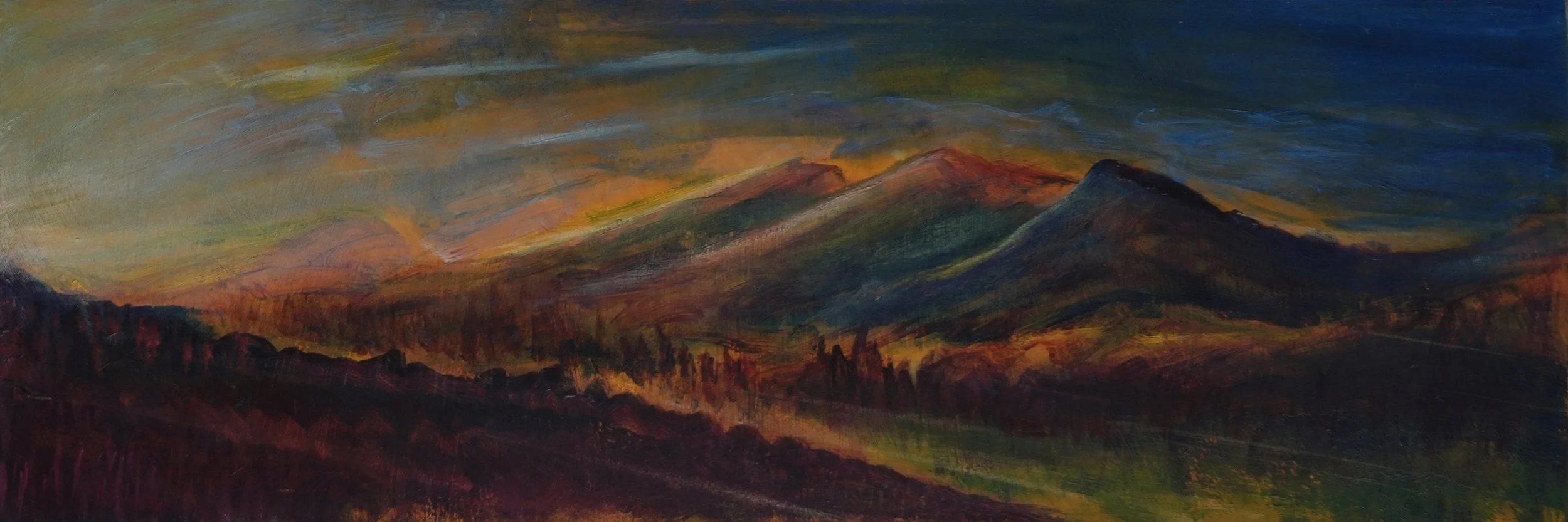
night, for now
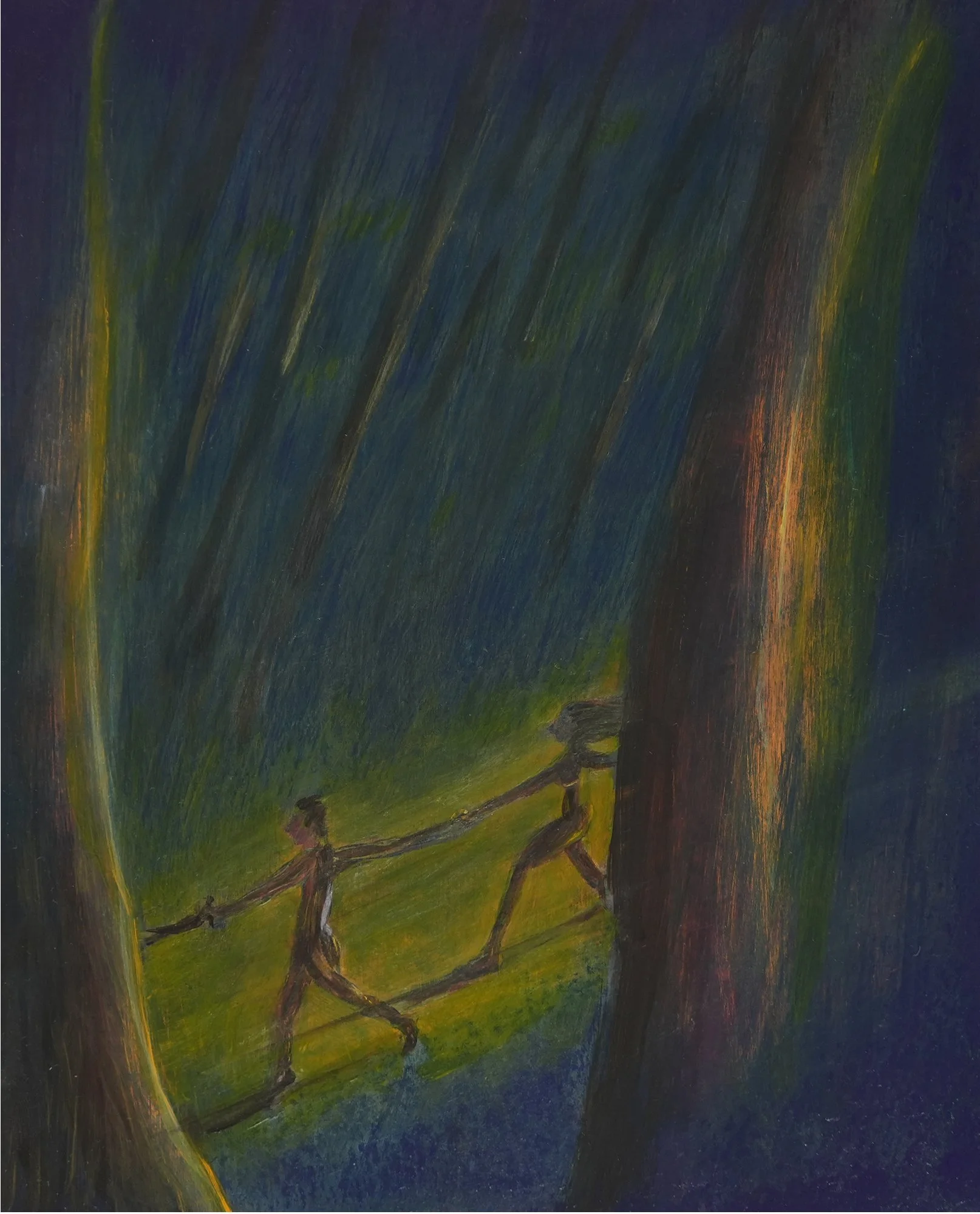
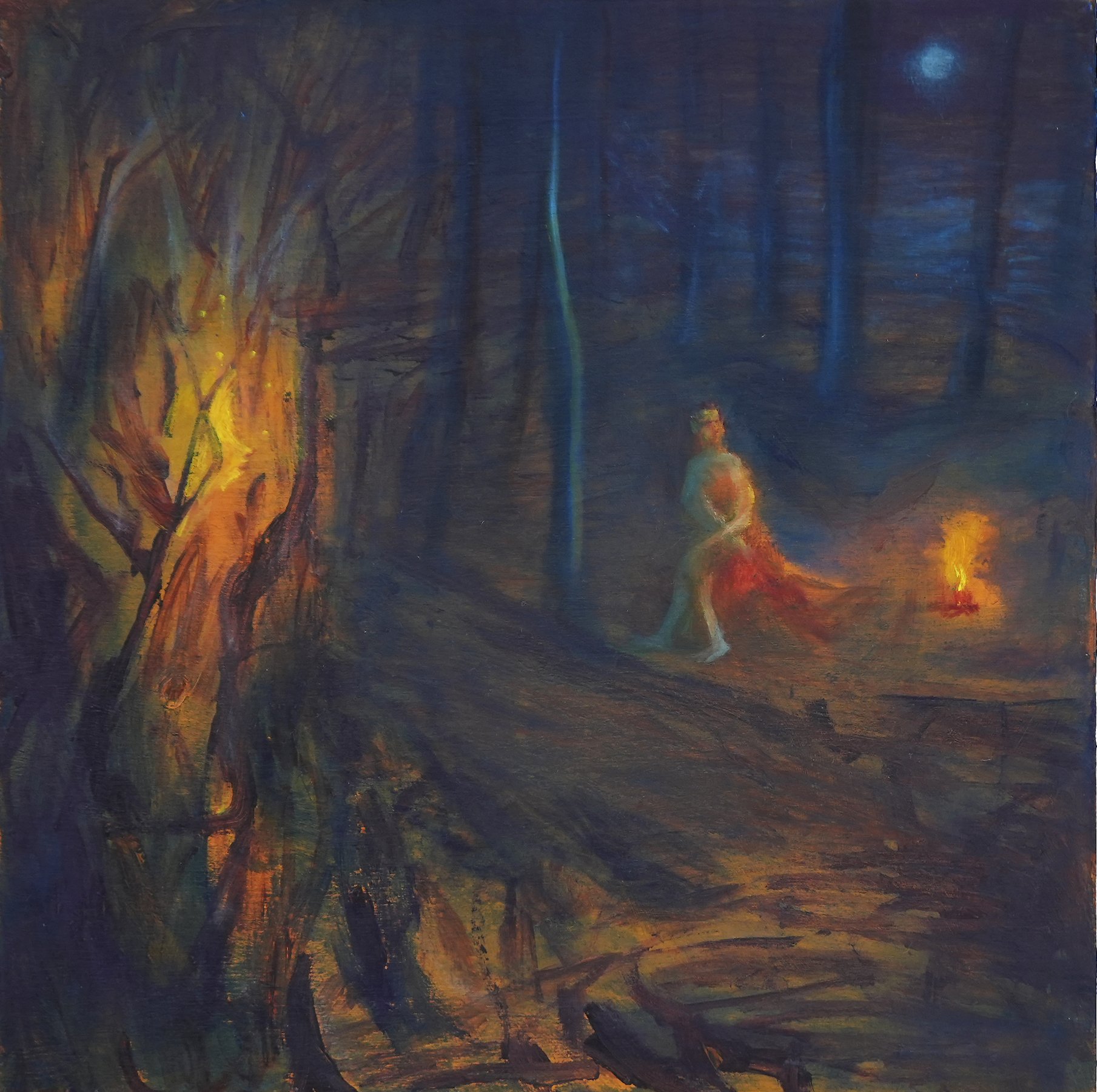
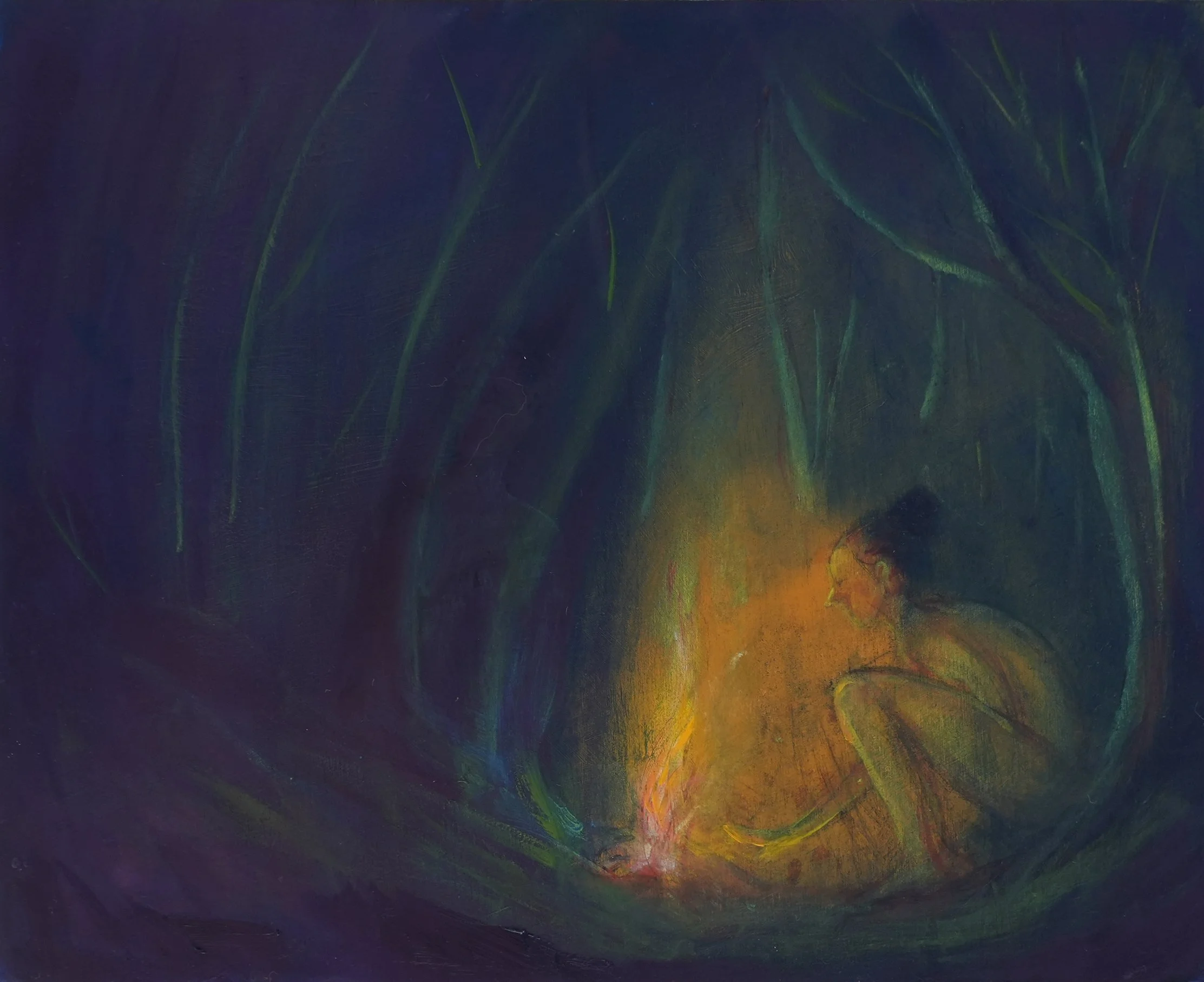
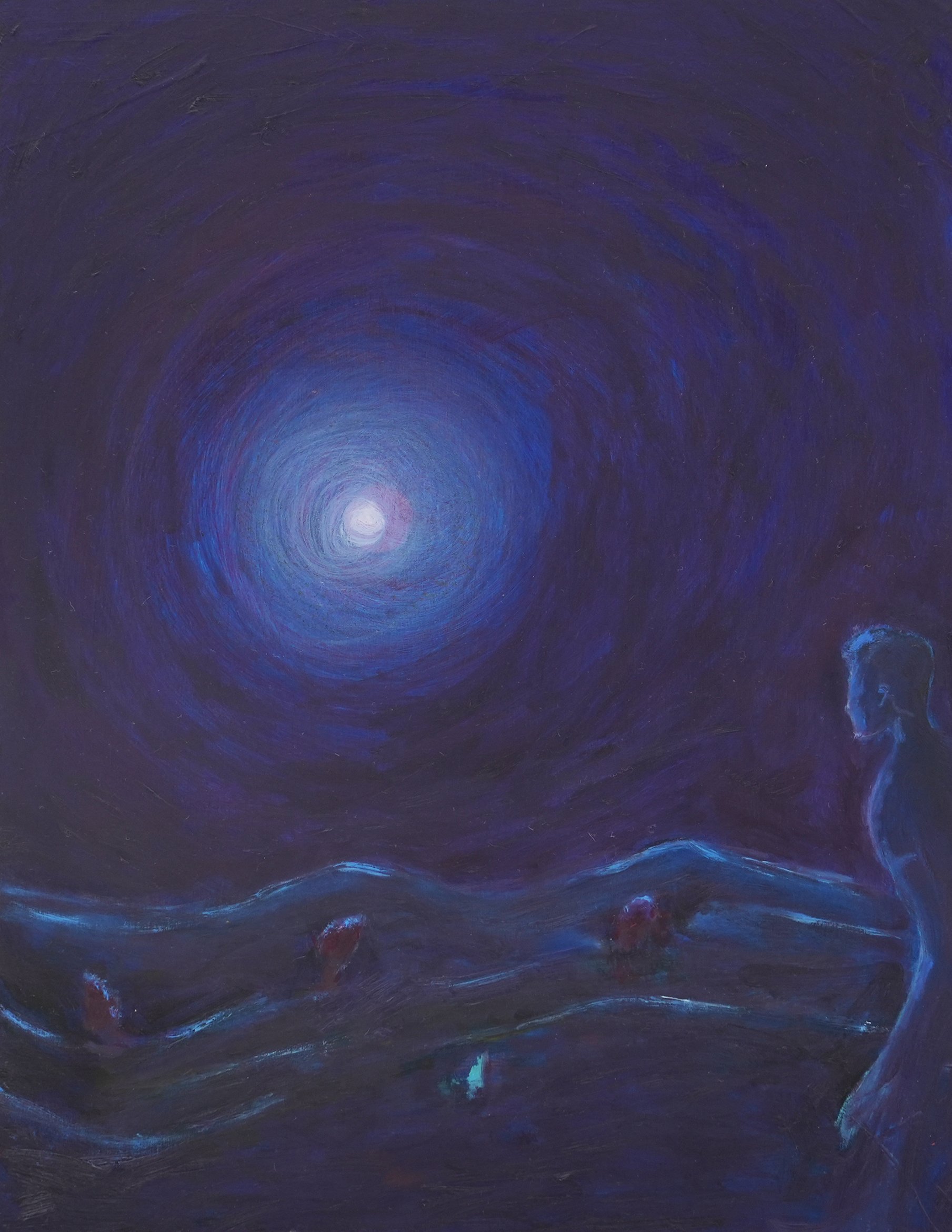
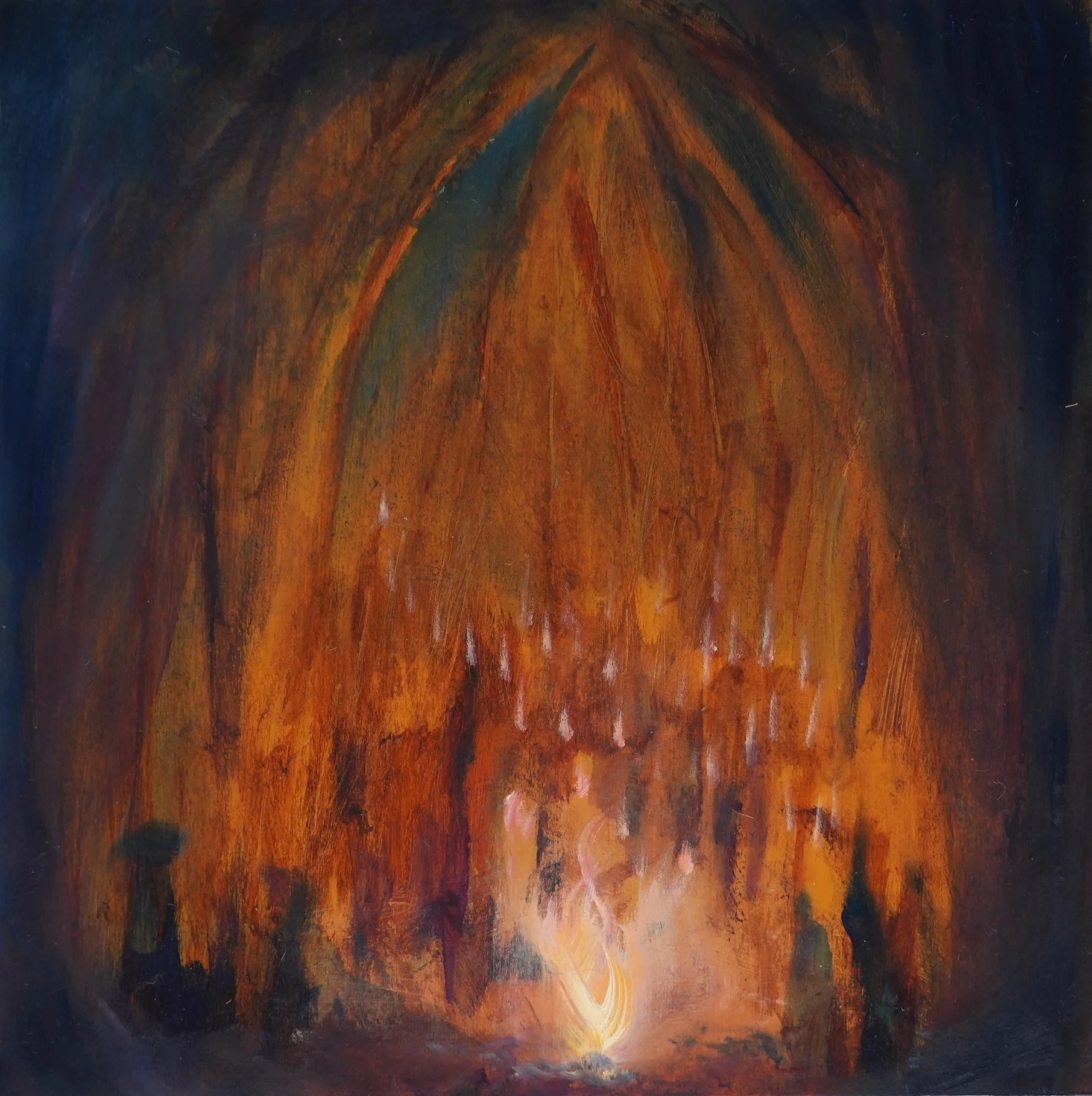
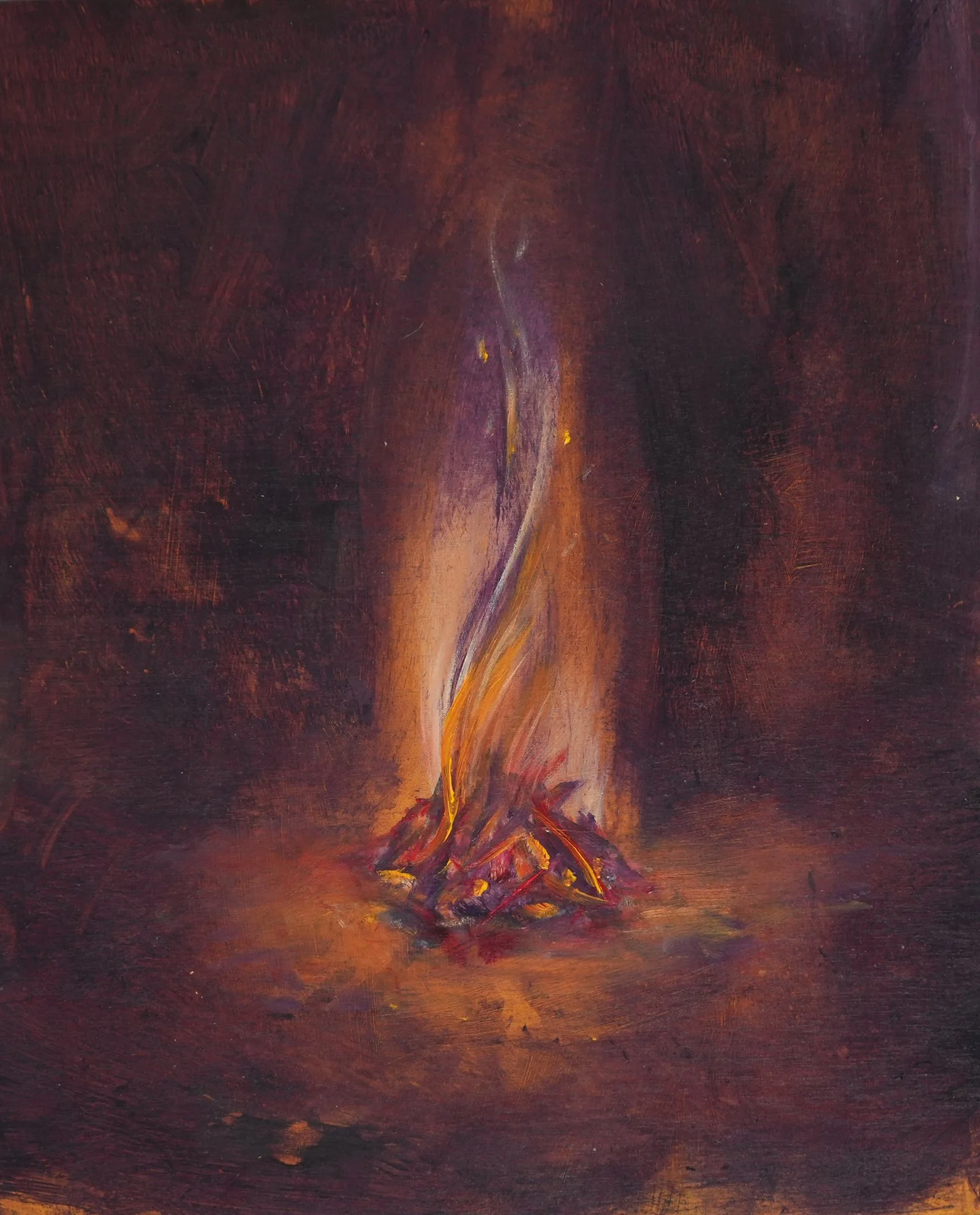
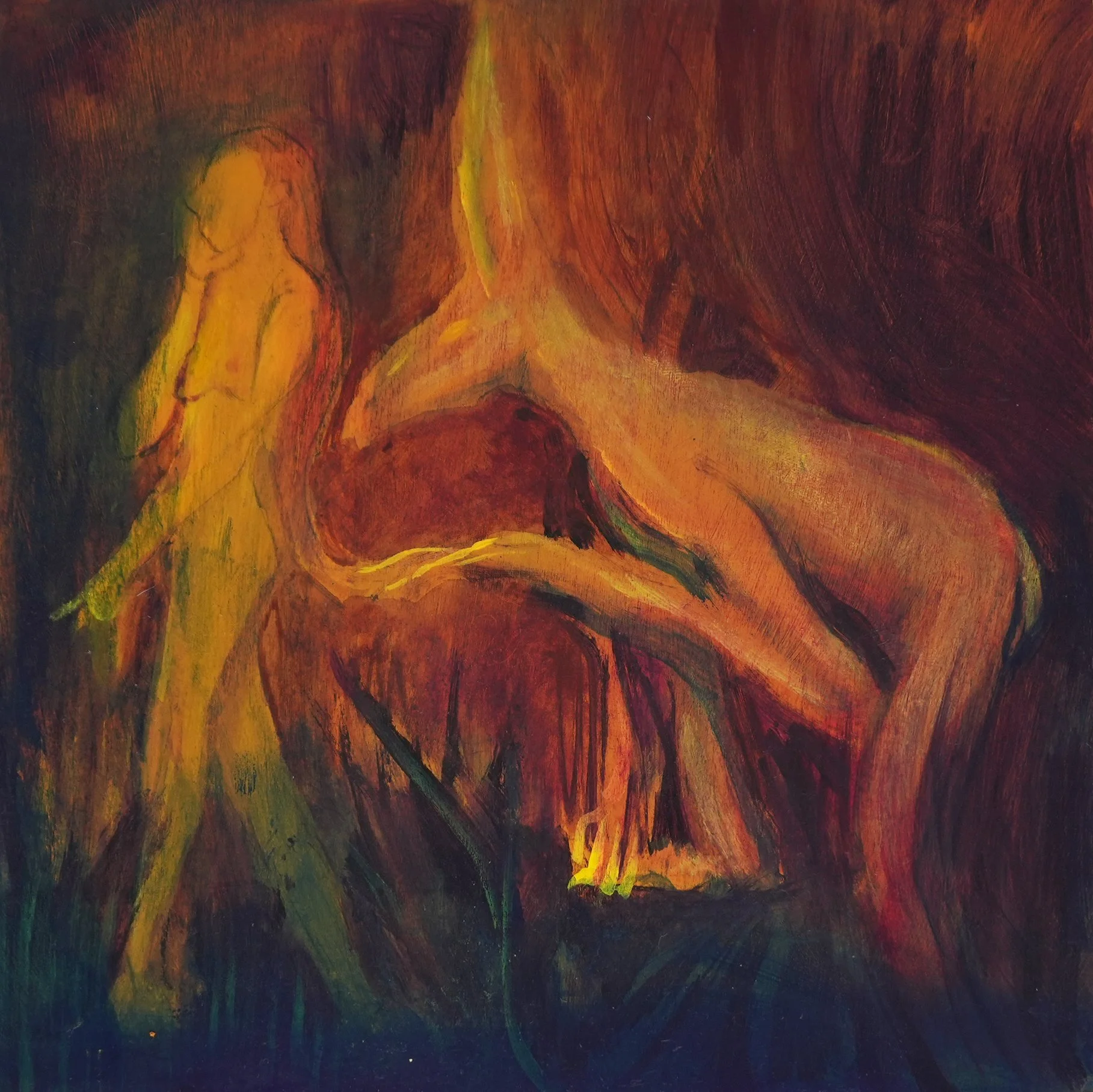
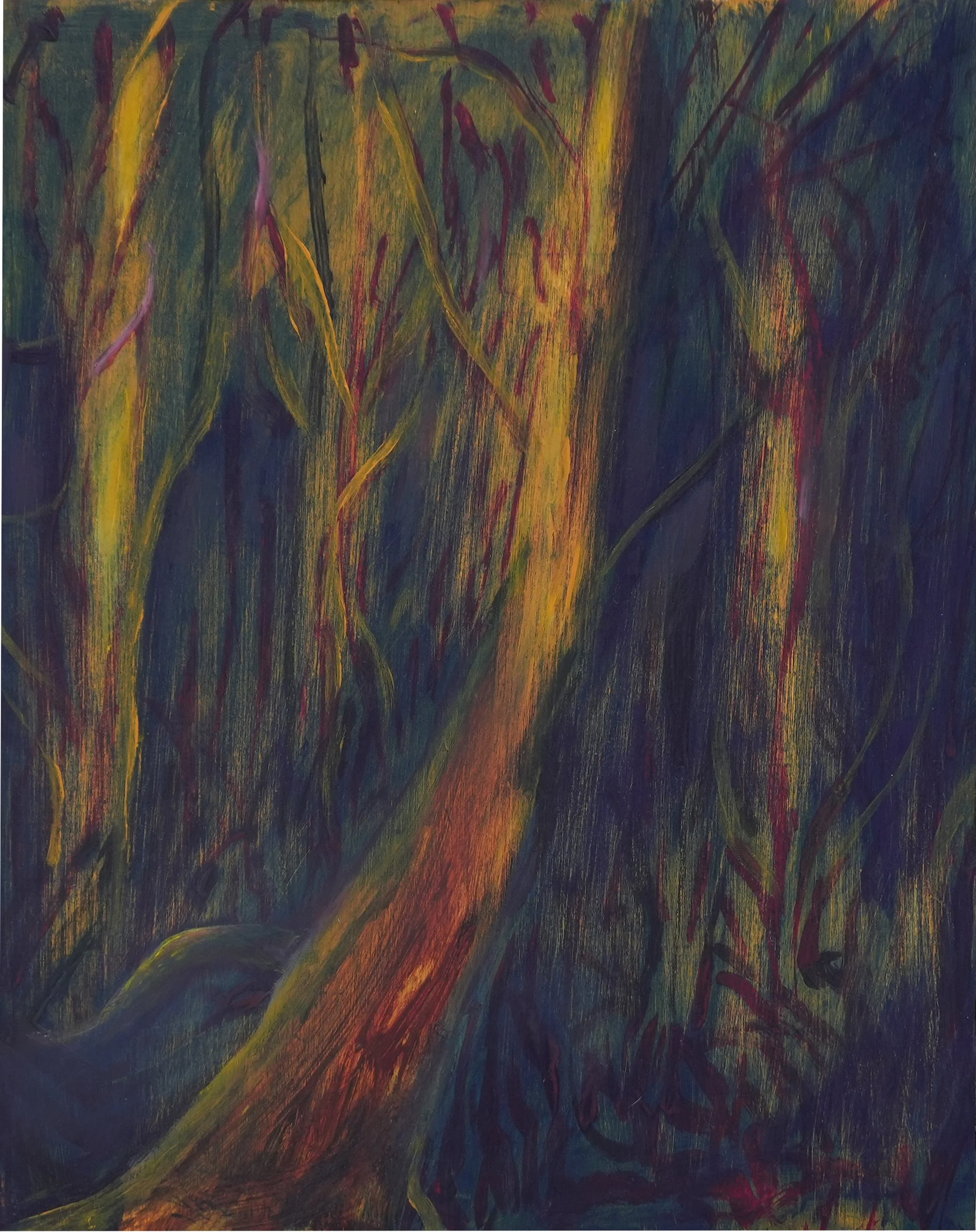
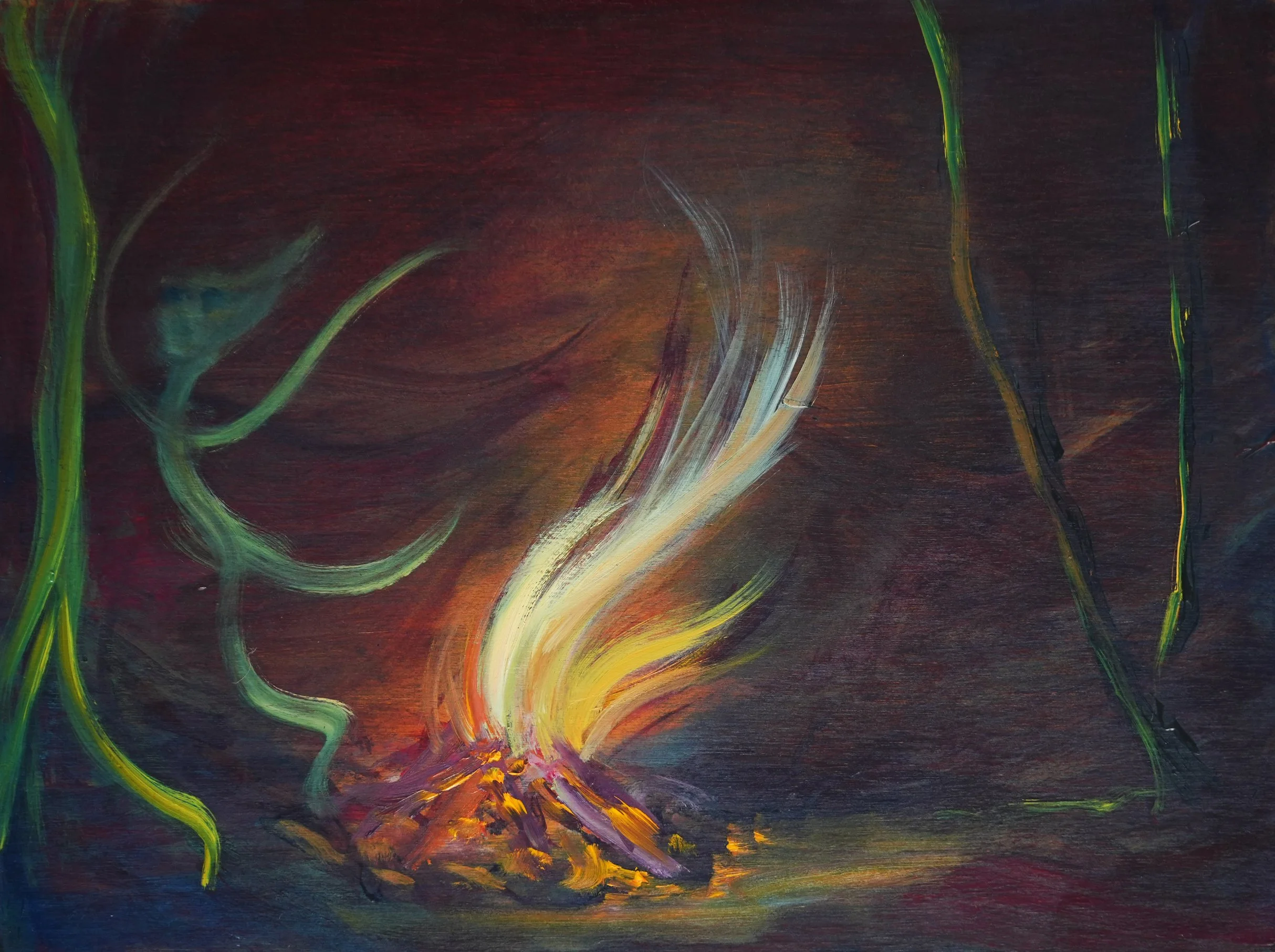
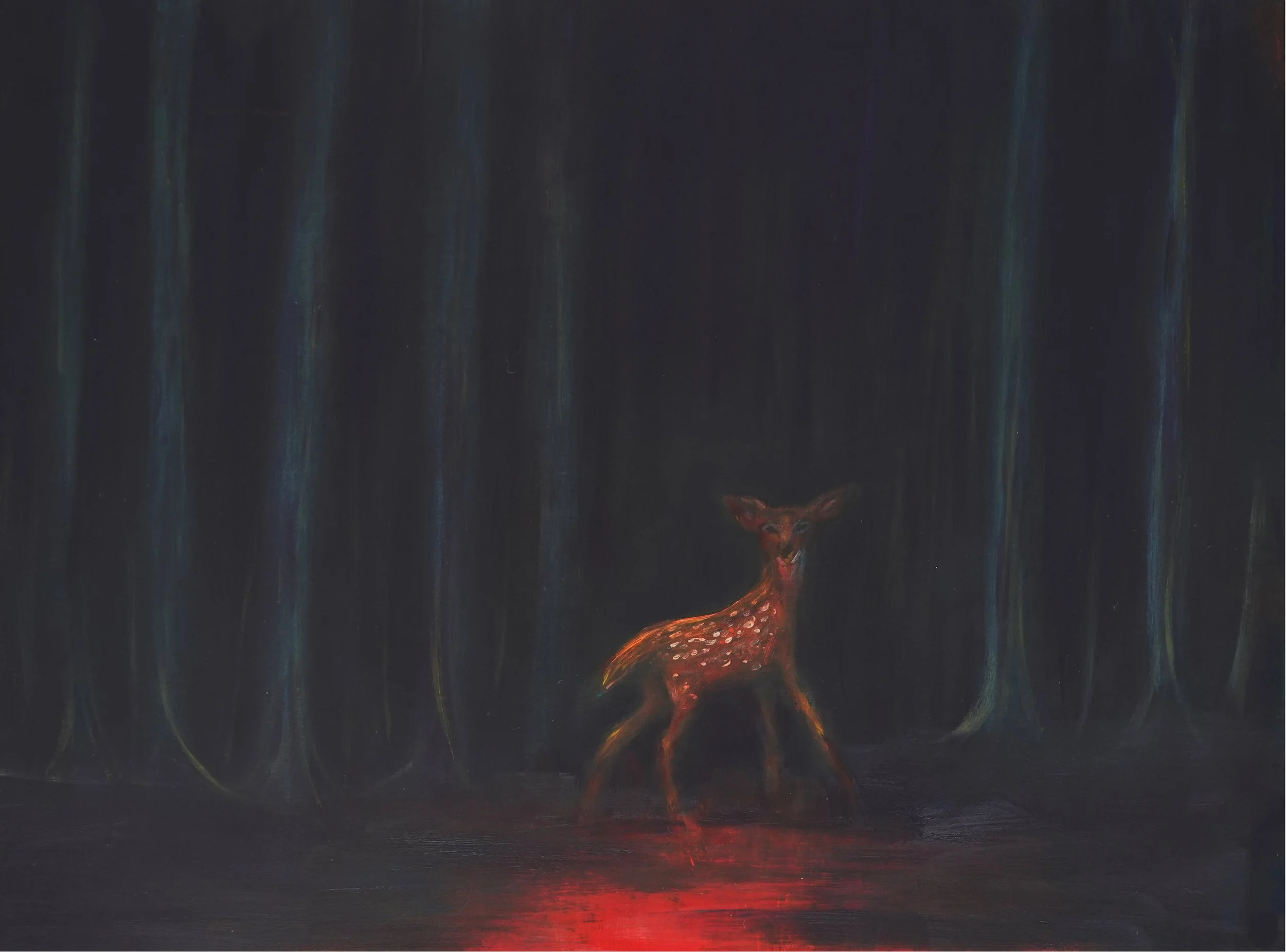
Night, For Now traces a trek through an Appalachian forest where darkness gives rise to risk, embodied as creatures lurking at the periphery. Firelight becomes an anchor and recurring motif, a source of warmth and orientation against an ever-present threat.
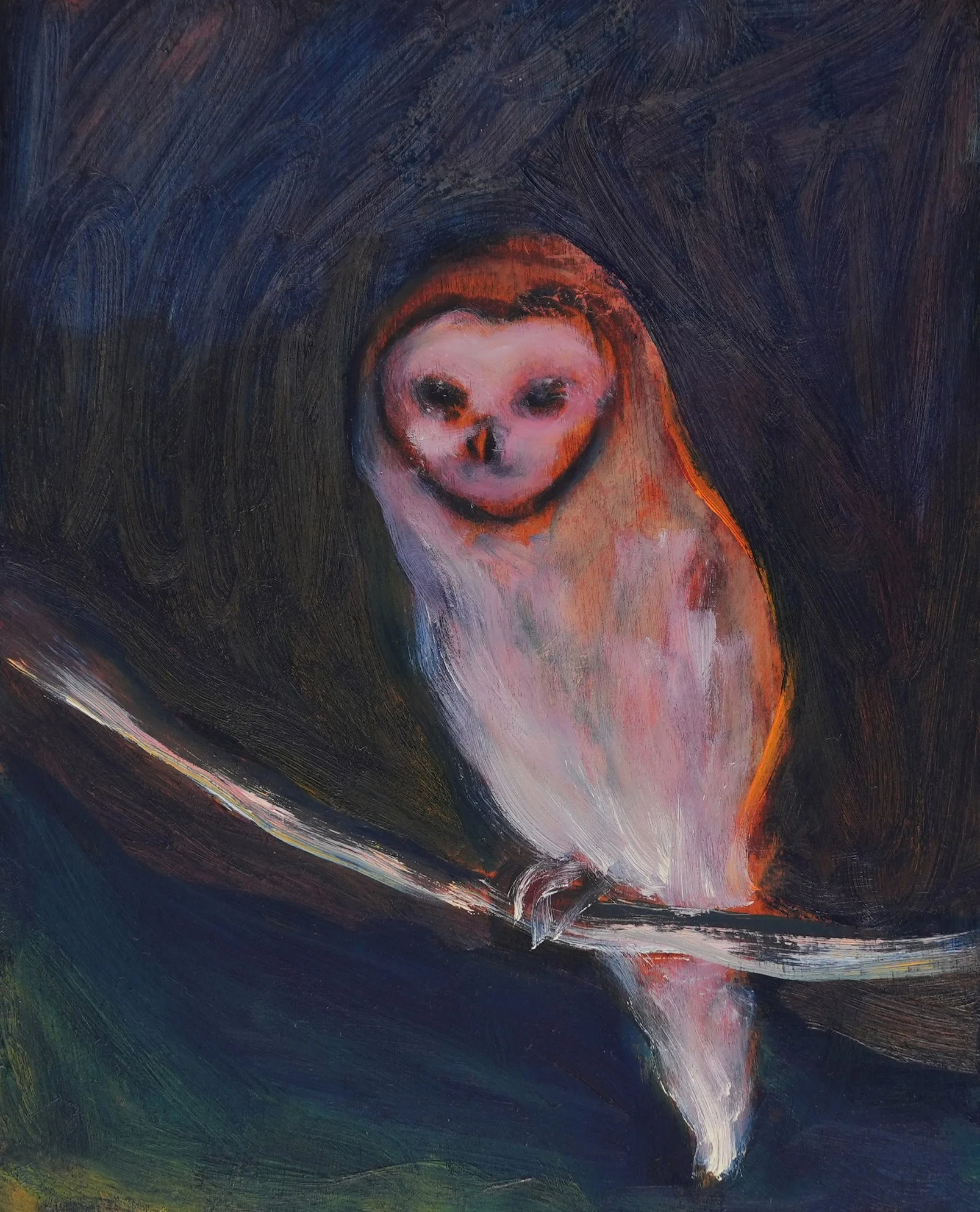
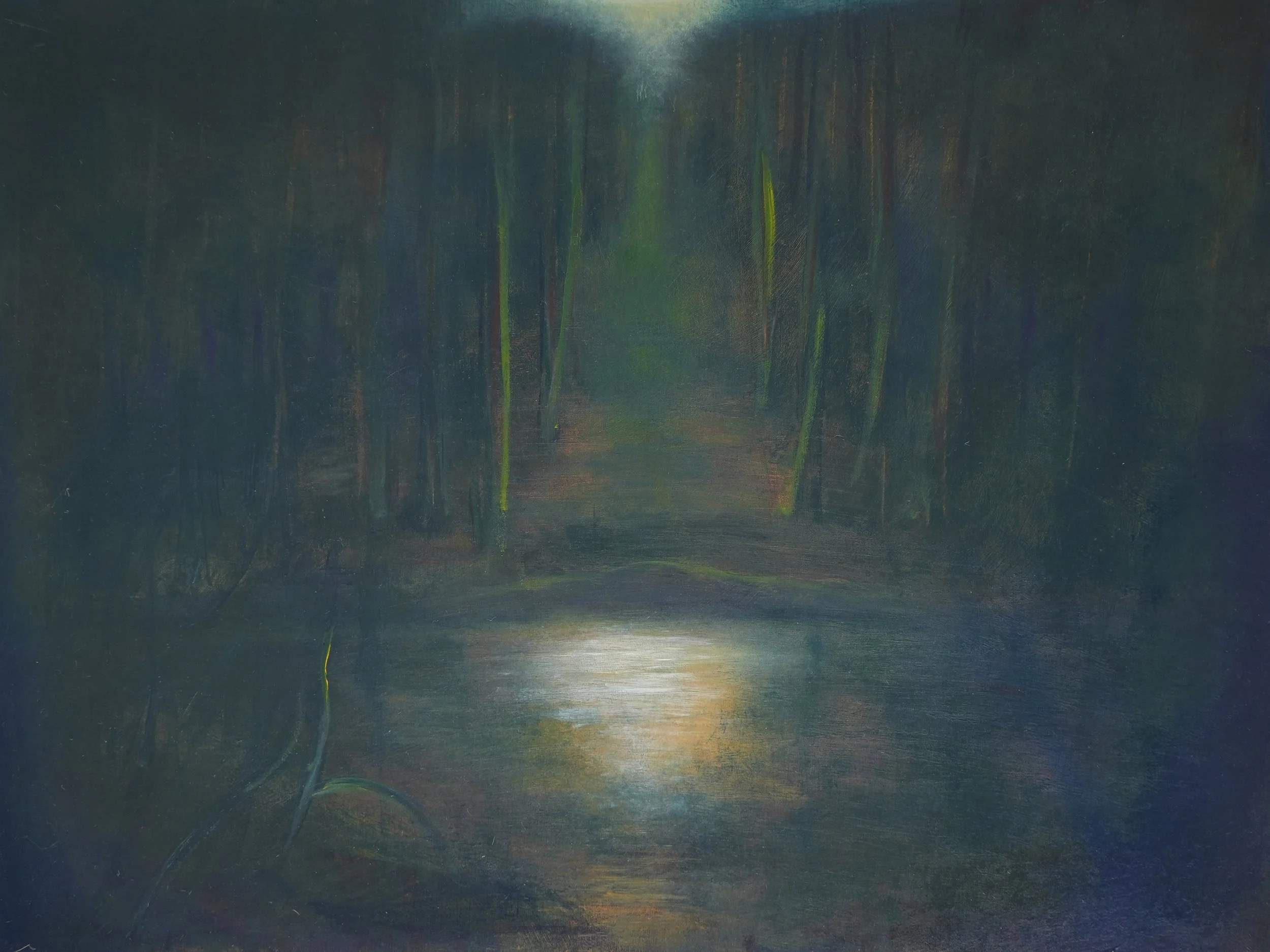
Hugo Regan is a first-generation American, born in San Francisco to Salvadoran parents who came to the U.S. fleeing civil war. He grew up between two worlds: the safety his parents had crossed borders to find, and the stories of what they left behind. He is based in Houston, Texas, where Night, For Now was made during the winter of 2025–2026.
These paintings were made at a moment when the safety his parents sought is no longer guaranteed for all families.
Why firelight?
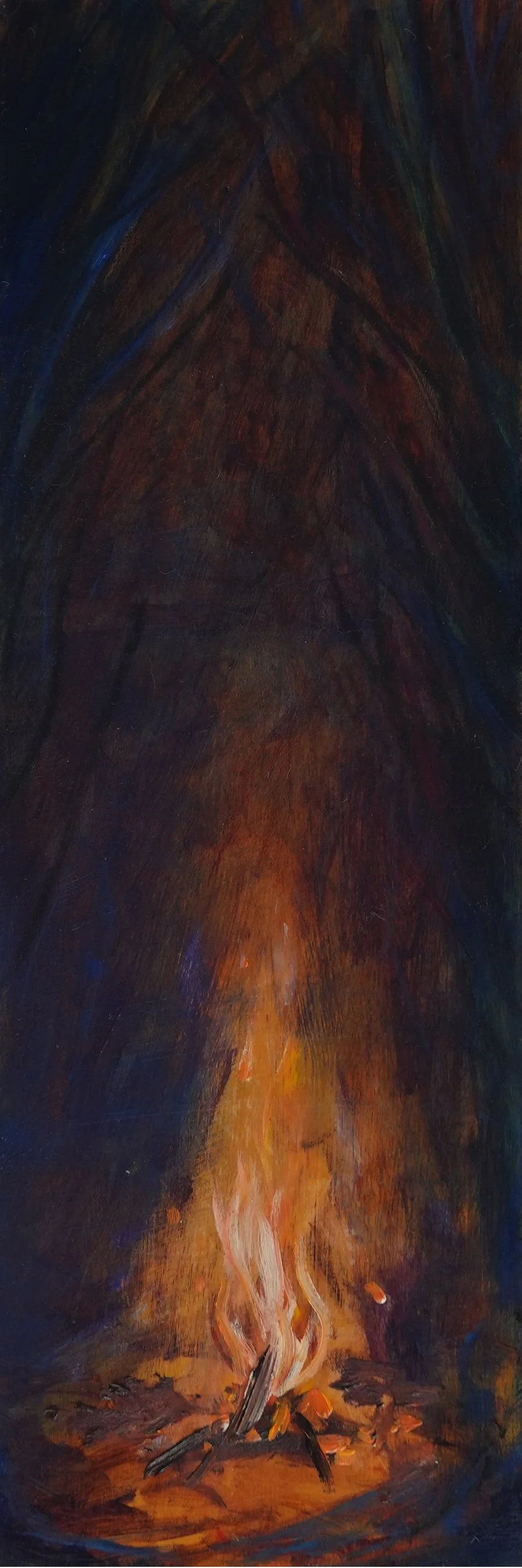
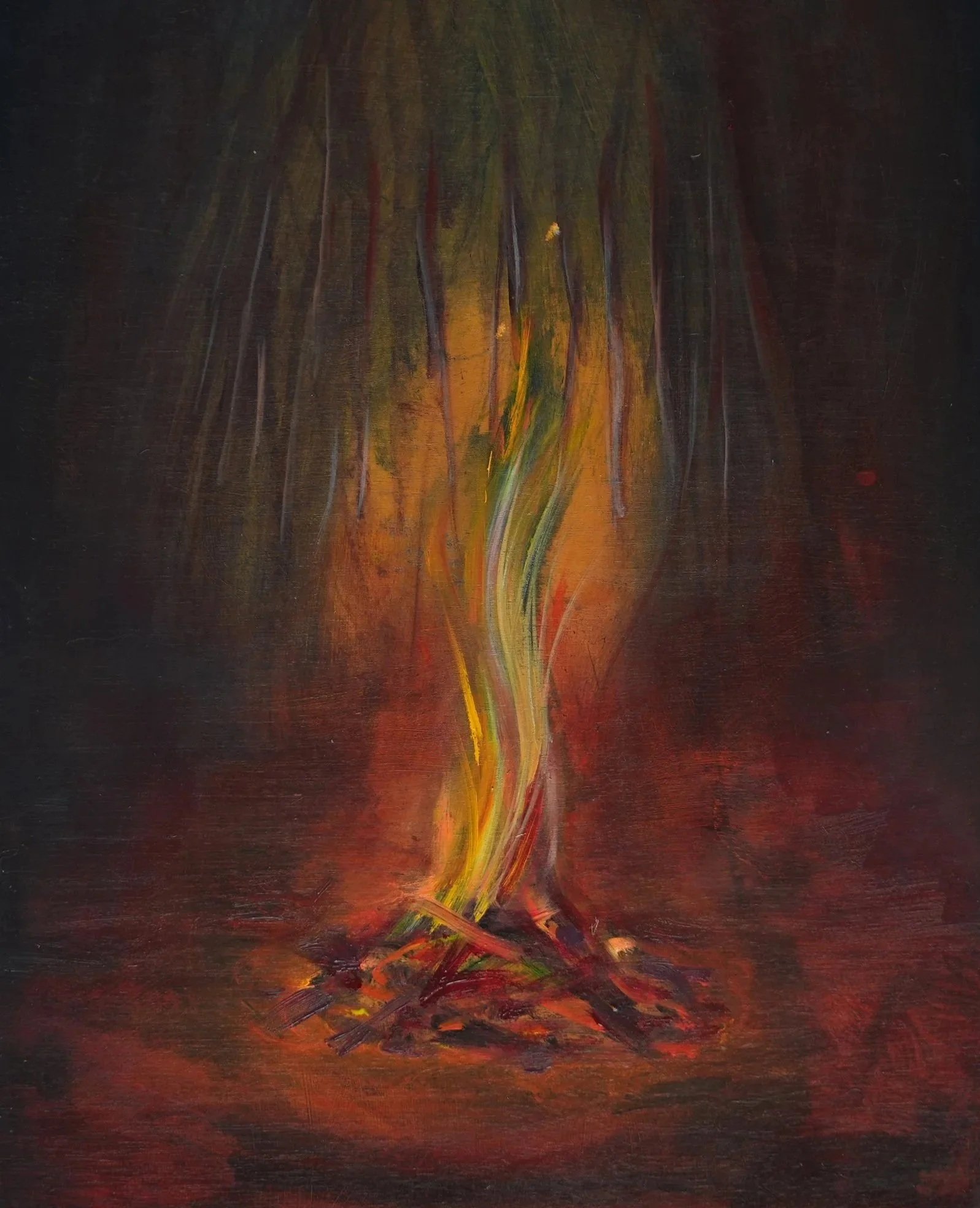
Night, For Now began with a drawing of two figures and a campfire. As the series evolved and their story came together, the firelight remained a consistent character. Fire provides warmth and offers orientation in the dark. It is where meals are made and where people come together. For the figures in this series, the fires are the constant that keeps danger at bay.
But fire is never really safe. As a kid living in the Bay Area, I once set fire to objects in the backyard, doused with gasoline we used for the lawn mower. Somehow, I managed to put the fire out before damage occurred, but that memory stays with me. I think that experience lives somewhere inside these paintings.
Fire is beautiful, but that beauty has real potential for destruction. That tension forms the psychological center of the work. Gaston Bachelard wrote that fire is the first object of human reverie, the element that invites contemplation while demanding vigilance. You cannot look away from it, nor can you fully trust it.
Visually, firelight offered permission. A single dramatic source of light collapses the darkness around it, expanding and drawing every color toward its center. The flames in this series move the way paint moves: fluid, alive, never exactly where you expect it.
cryPtids, creatures, and the unknown
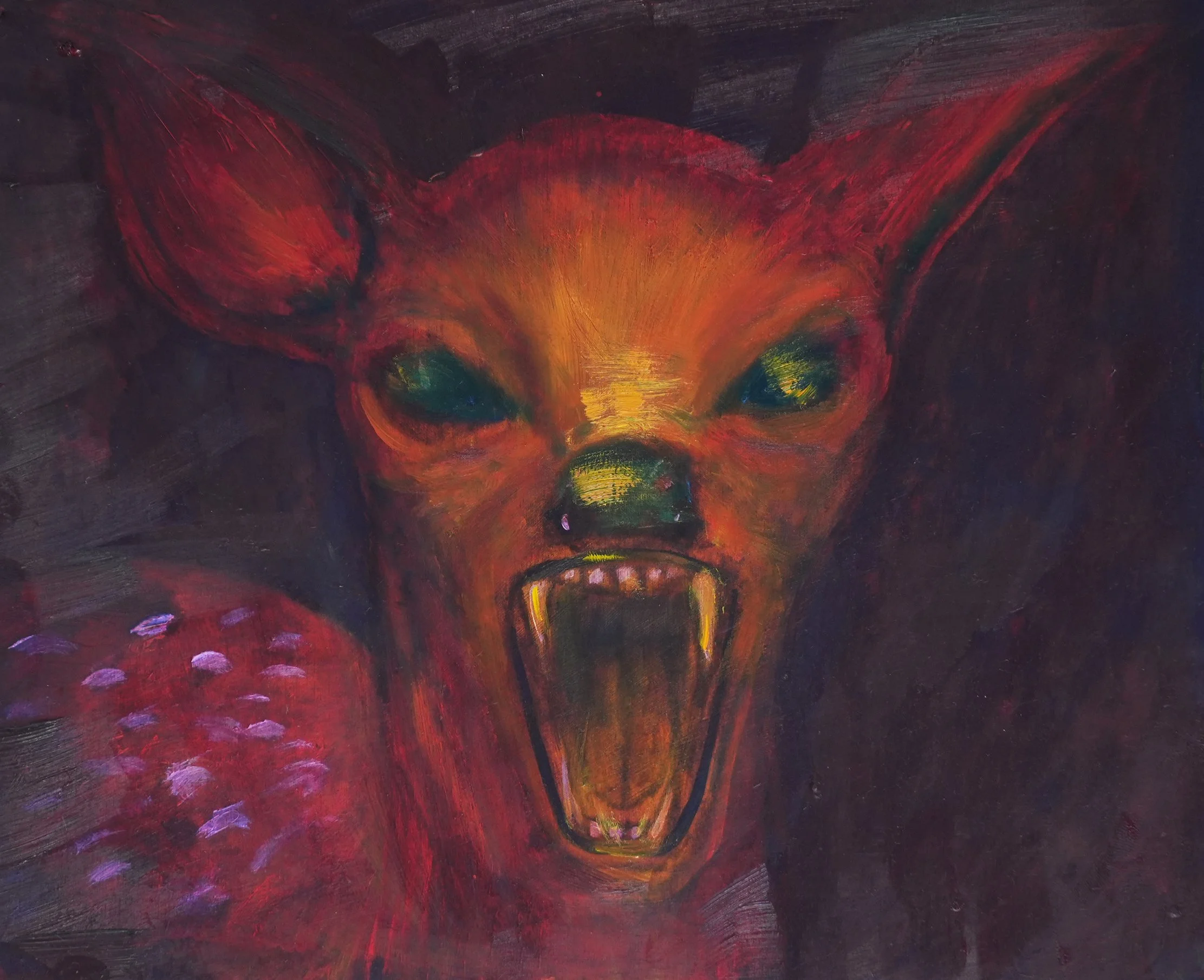
In the painting Crawl, something moves at the edge of the frame. A tail slips through the grass at the treeline, serpentine and ambiguous, almost indistinguishable from the undergrowth. The creatures in Night, For Now belong to a lineage of folkloric danger: Appalachian skin-walkers, the Salvadoran myths like La Siguanaba or the Cadejo, which appear at crossroads to travelers far from home. My father, who often traversed between the U.S. and El Salvador, swears he saw it once, on a road in Mexico, and has told that story many times! These are figures that live on the edges. Never fully seen, they exist in the corner of your eye and disappear the moment you turn to look.
These figures that move through darkness, that watch without declaring themselves, that threaten the vulnerable and the innocent, are not only creatures of folklore; they also echo the lived experience of people who cross borders, who move through terrain that was not made for them, who understand that danger does not always announce itself.
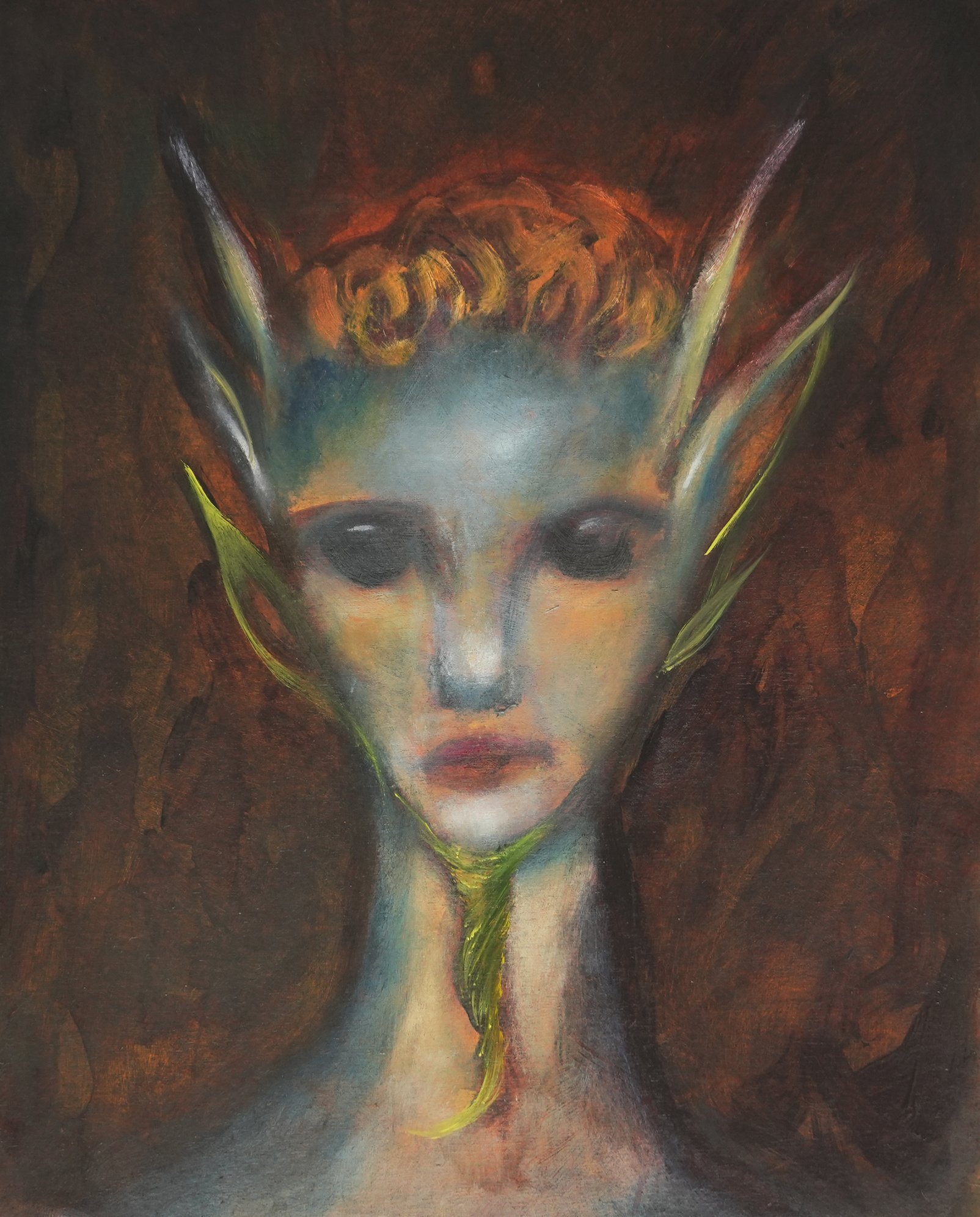
But The Mimic (8 × 10, oil) adds complexity. Rendered in the same visual language as the figures I began painting early on, the Mimic carries a sense of interior life, perhaps even sorrow. If the monster is painted with tenderness, who is the monster?
José Guadalupe Posada understood that the figure society renders inhuman is often the one that carries the most humanity. To villainize what you do not understand is its own form of violence. These creatures can then be seen as symbols, even mirrors. The figures quietly ask a simple question: why does the unknown feel so threatening to us?